

Artificial intelligence (AI) governance has become a business priority as organisations adopt artificial intelligence across everyday operations. Organisations now use AI to improve productivity, support decision-making and streamline work across different functions. As AI adoption accelerates, leaders face growing pressure to ensure employees use these tools responsibly rather than simply encouraging wider adoption.
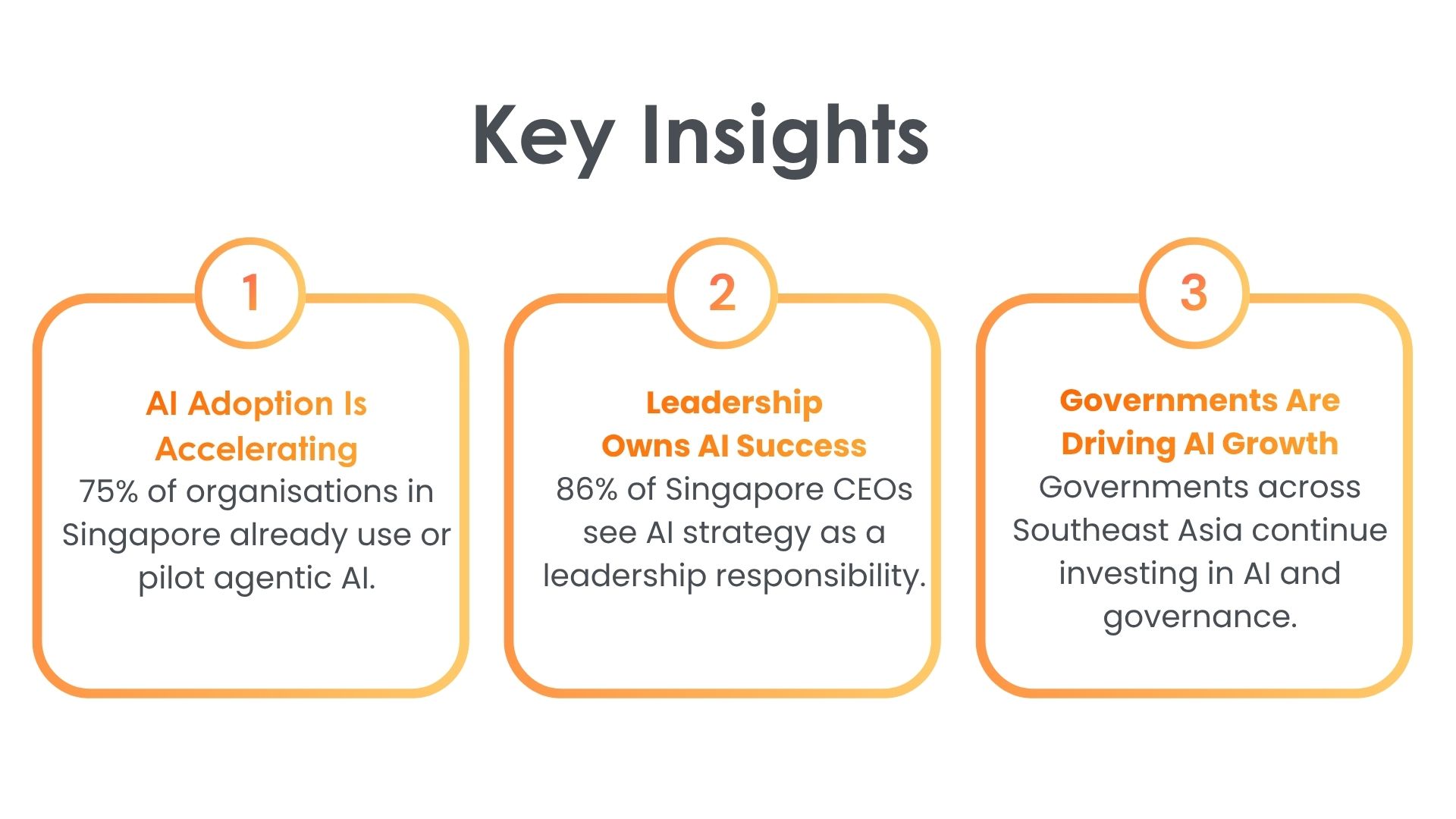
Singapore Business Review (2026) reported that 75% of organisations in Singapore have already deployed or are piloting agentic AI solutions. However, 78% of IT leaders said gaps in real-time data infrastructure continue to slow AI initiatives. These findings show that successful AI adoption depends on more than introducing new technology.
Organisations increasingly recognise that they also need the right governance and oversight to support long-term success.
AI Requires More Than Technology
Many organisations began their AI journey by focusing on new tools and use cases. Today, the conversation has shifted towards accountability. As AI becomes part of daily work, organisations need clear policies that define how employees should use AI and where human judgement must remain part of the decision-making process.
This shift reflects a broader change across the business landscape. Organisations no longer measure AI success by adoption alone. They also need confidence that AI supports business goals without creating unnecessary operational, legal or reputational risks.

AI Governance Is Now a Leadership Responsibility
AI governance no longer sits solely with technology teams. Business leaders now play a much larger role in deciding how AI supports their organisations.
A recent global study by Dataiku found that 86% of Singapore CEOs believe their role is at risk if their AI strategy fails to deliver business results. The study also found that 95% believe employees already use generative AI tools without approval, while 78% worry that AI agents could expose organisations to legal risks (Dataiku, 2026).
AI governance now extends beyond technology teams. Leaders need clear visibility into how employees use AI and must establish practical guidelines that encourage innovation while protecting the organisation.
AI Governance Supports Business Growth
Governments and businesses across Southeast Asia continue investing heavily in AI capabilities. Speaking at the Asia Economic Summit, Singapore’s Minister for Digital Development and Information, Josephine Teo, said Singapore will work with ASEAN partners to help businesses, workers and governments use AI more effectively. She also highlighted the importance of strong governance and trusted data as AI adoption continues to grow across the region (The Straits Times, 2026).
These initiatives reflect how governments are actively shaping AI development across the region. As investment, collaboration and policy support continue to grow, organisations that strengthen their AI governance will be better positioned to adopt AI confidently and benefit from this evolving ecosystem.
Looking Ahead
AI creates significant opportunities, but technology alone does not guarantee better business outcomes. Organisations still need leaders who can make sound decisions, set clear expectations and ensure employees use AI responsibly. Good governance builds trust, reduces unnecessary risk and allows organisations to adopt AI with greater confidence.
At HRnetOne, we believe responsible AI adoption starts with the right leaders. Organisations need leaders who can balance innovation with governance, make sound decisions and build the capabilities required for long-term success.
![HRNetOne-logo-white-1[1]](https://www.hrnetone.com/wp-content/uploads/2026/09/HRNetOne-logo-white-11.png)